A scalable infrastructure in the cloud is state of the art today. Function as a Service (FaaS) is the next step, allowing users to focus more on their code than on their infrastructure. This applies to all serverless solutions, at least on AWS.
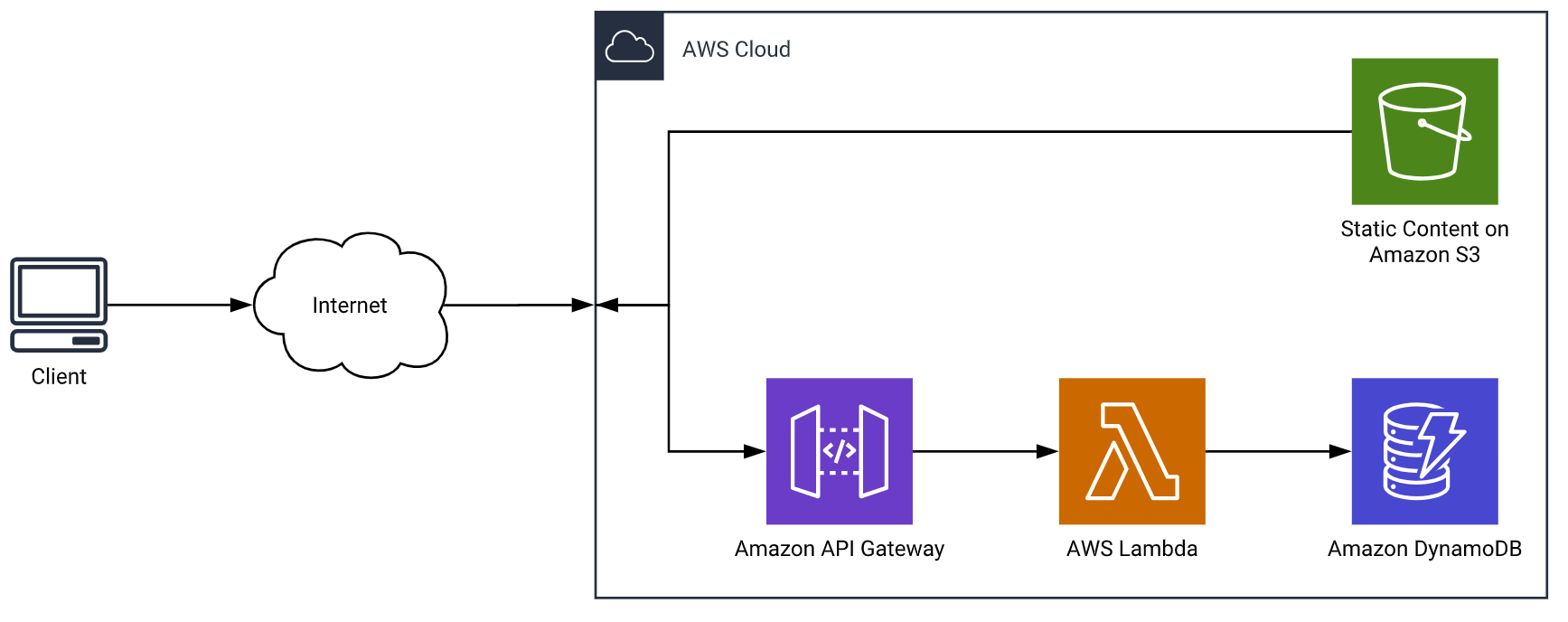
AWS API Gateway is an important service in the AWS Serverless platform for ensuring that the services provided (e.g., Lambda) communicate properly with the internet in a secure and effective manner.
The service establishes communication between the web and your backend services, so to speak, so that they can access data, business logic, or other functionalities with up to hundreds of thousands of simultaneous API calls. During this process, it manages data traffic, resource sharing across multiple sources, and authorization and access control. This allows you to restrict or monitor data flow and gives you full control over the processes.
What are the advantages?
As with other serverless solutions, you only pay when you use the service, which gives you enormous cost flexibility and makes unused resources a thing of the past. You only pay for API calls and outgoing data transfer, and if your service is heavily used, there is a tiered pricing system to reduce costs.
Let's take a closer look at the different types to understand how the service can make our work easier and where the application possibilities lie.
What APIs are available?
A basic distinction is made between RESTful APIs and WEBSOCKET APIs. RESTful APIs are also differentiated between HTTP APIs and REST APIs.
RESTful APIs
RESTful APIs are optimized for serverless workloads and HTTP backends. If you only need API proxy functions, choose the HTTP API, and if the use case also requires management functions, choose the REST API. Basically, both are HTTP-based, offer stateless client-server communication, and use standard HTTP methods such as GET, POST, PUT, PATCH, and DELETE as implemented in the service. HTTP APIs can be considered the entry point with basic functionality. Once you need additional features such as API keys, usage throttling, caching, private API endpoints, or AWS WAF integration, the RESTful API is the preferred solution.
WEBSOCKET APIs
WEBSOCKET APIs go one step further by enabling bidirectional real-time communication. The gateway maintains a permanent connection and takes control of message transmission between the client and the cloud backend. This is done using stateful FULL DUPLEX communication. Chat applications and streaming dashboards are examples of the use of the WEBSOCKET API.
If you are interested in learning more, we recommend taking a look at the developer guide or the resources provided by AWS, which include tutorials, reference architectures, and other useful documents about the AWS API Gateway.