
We always consider new technologies within the context of the overall architecture – not in isolation. Especially with topics like sovereignty and AI, the goal is to design systems in such a way that they remain sustainable and controllable in the long term. Our aim is to strategically deploy innovation where it creates genuine added value within the project.
Part of the Community – with Enthusiasm and a Clear Vision
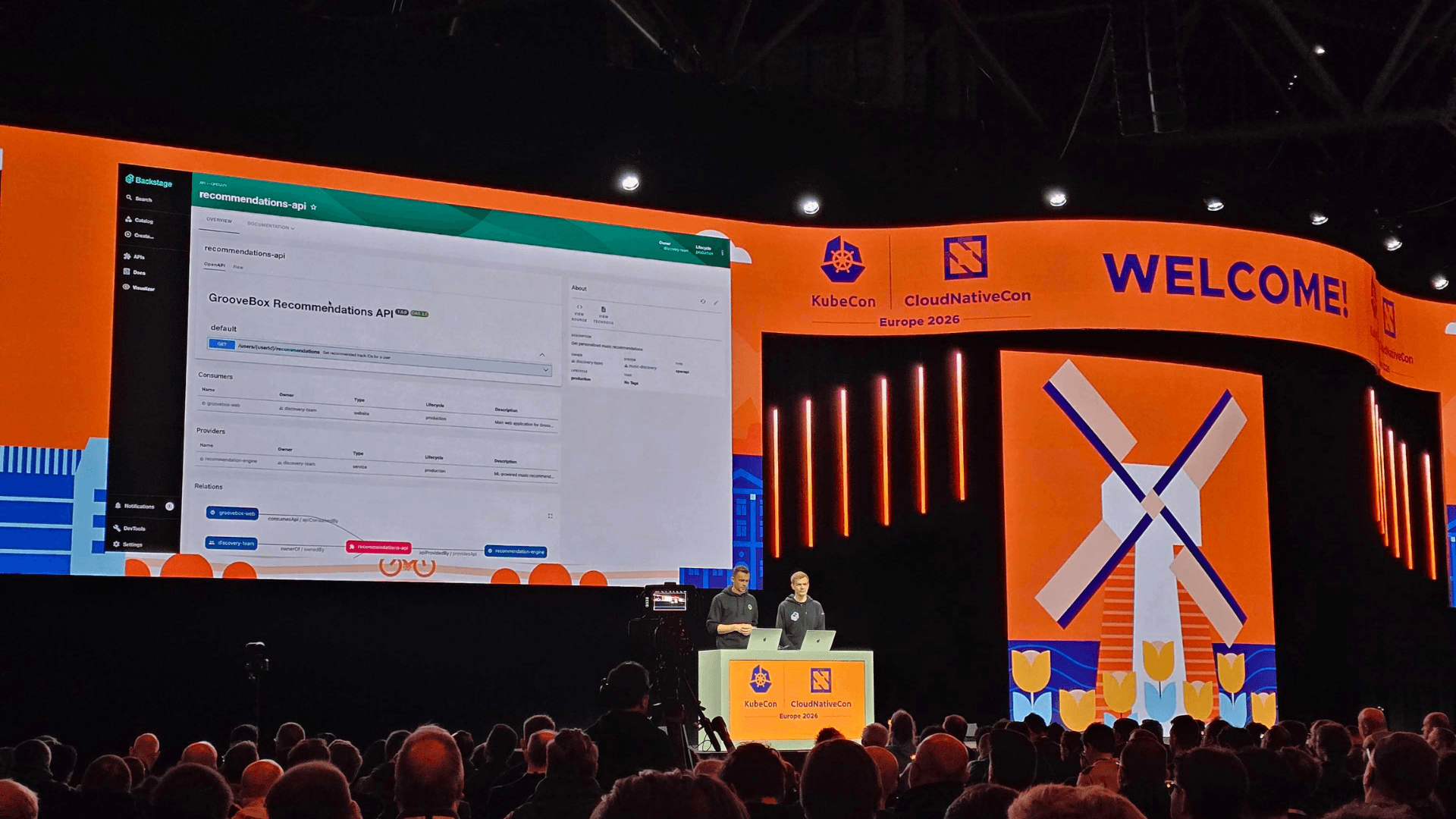
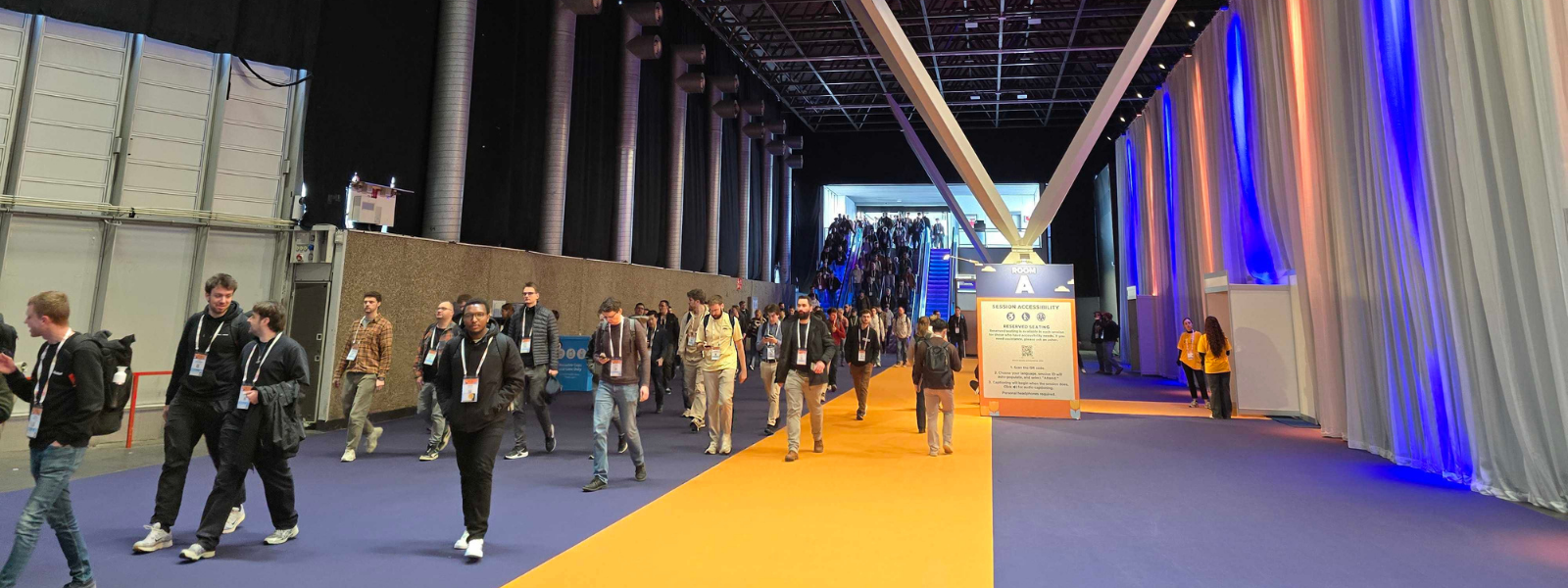
At KubeCon + CloudNativeCon Europe 2026, one thing was particularly noticeable: the energy of the community. New ideas, open exchange, and genuine enthusiasm for technology – this is precisely what drives the cloud-native ecosystem forward.
This dynamic inspires us. At the same time, we consciously contextualize it.
Because our customer projects aren't about trends, but about robust solutions. We pick up on impulses, question them, and consistently make decisions based on one question: What concrete added value does a technology create in practice?
This way, we stay close to the community – and focused on what truly matters to our customers.
How we evaluate technologies in the customer context
We never make the decision for or against a tool in isolation. It is always part of a larger overall picture.
Our evaluation is based on three key questions:
- Existing infrastructure
How does a new tool or technology integrate with existing infrastructure in terms of security, effort, and benefits? - Ecosystem and integrations
What synergies arise from a platform choice?
How well does a tool integrate into existing environments? - Operation and compliance
What requirements arise from hosting, security, and regulatory frameworks?
Maturity and Future Viability
In addition, we take a close look at a tool's maturity: community support, continuous development, and long-term stability. To remain objective and think outside the box, we use external benchmarks such as the Thoughtworks Technology Radar to inform our decision-making. This exchange with global technology trends helps us distinguish between short-lived hype and market-ready standards, and to base our assessments on a broad, expert foundation.
We pay particular attention to designing architectures that allow decisions to remain reversible and enable solutions to evolve during operation without fundamental disruptions.
Validation through Practice
How these criteria hold up in everyday use becomes especially apparent during operation. We evaluate decisions not only conceptually, but also based on concrete effects within the project—for example, regarding stability, deployment speed, or the actual operational effort.

In practice, it quickly becomes clear whether a technology truly works. For us, stability, transparency, and maintainability in daily use are paramount. We only implement tools if they demonstrably reduce the workload for teams and function reliably – not simply because they are new or particularly popular.
Two practical examples: CUE and ArgoCD
CUE – Configuration as a controllable system
Configuration is one of the biggest sources of errors in many projects.
Unclear dependencies, inconsistent values, and a lack of validation quickly lead to operational problems.
CUE addresses precisely this issue:
- as a declarative language for describing configurations,
- with the ability to validate them early on,
- and increasingly integrated into development processes.
For us, the added value arises primarily where configurations become complex and governance plays a central role.
ArgoCD – Deployment reimagined
With ArgoCD, we rely on a clear GitOps approach:
The desired state of a system is fully defined in Git – and implemented automatically.
This offers several advantages:
- reproducible deployments,
- transparent changes,
- reduced manual intervention.
Especially in complex Kubernetes environments, this creates a stable foundation for development and operations.
Both examples are representative of our approach: technologies are not introduced in isolation, but are always embedded in such a way that they can be integrated into existing architectures and, if necessary, replaced or further developed.
Back to KubeCon: Exchange on Equal Footing
This brings us full circle to KubeCon.
Our colleagues were able to observe new developments on-site and, above all, benefit from direct exchange with manufacturers and other users – for example, regarding CUE or the Argo ecosystem.
The focus wasn't on theoretical scenarios, but on concrete experiences from customer projects:
What works? Where do challenges arise? And which developments are truly relevant for the next step?
For us, this exchange is a central component of our work – because it ensures that we not only follow trends but also make well-informed decisions.
Our Mission
Cloud-native is developing rapidly – and the number of tools and approaches is constantly growing.
Our mission at PROTOS is to provide guidance in this environment:
- through clear architectural principles,
- through a conscious approach to new technologies,
- and through a consistent focus on customer benefits.
We don't see projects as experimental grounds – but as an opportunity to systematically test new solutions and implement them effectively.
Or to put it another way:
We stay close to the community – and even closer to the needs of our customers.